
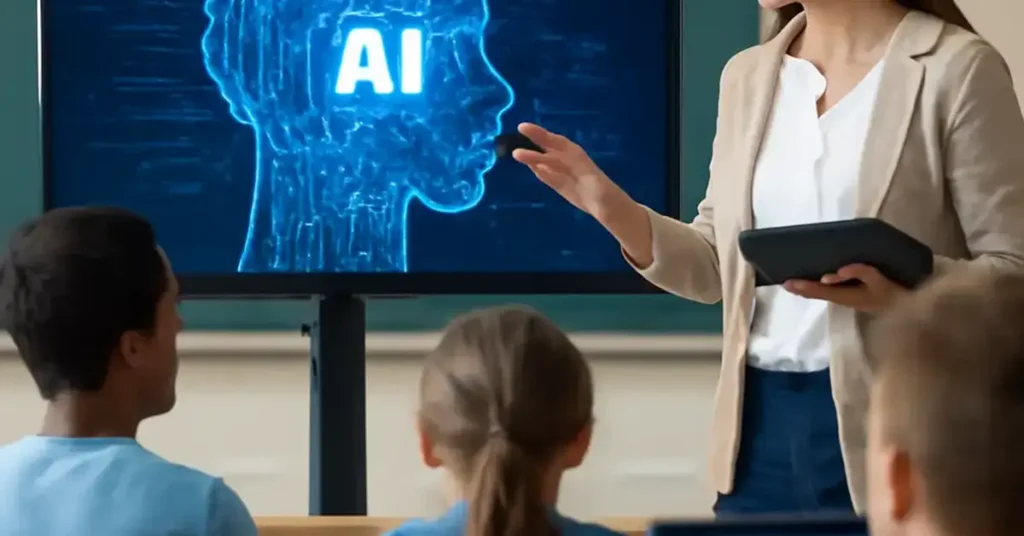
Artificial Intelligence in Education Key Takeaways
Artificial Intelligence in Education is no longer a futuristic concept—it is actively reshaping how students learn, how teachers instruct, and how institutions operate.
- Artificial Intelligence in Education enables personalized learning paths that adapt to each student’s pace and style.
- Intelligent tutoring systems and automated feedback tools are freeing up teacher time for more meaningful instruction.
- Ethical considerations, data privacy, and equitable access remain critical challenges as AI becomes more embedded in classrooms.
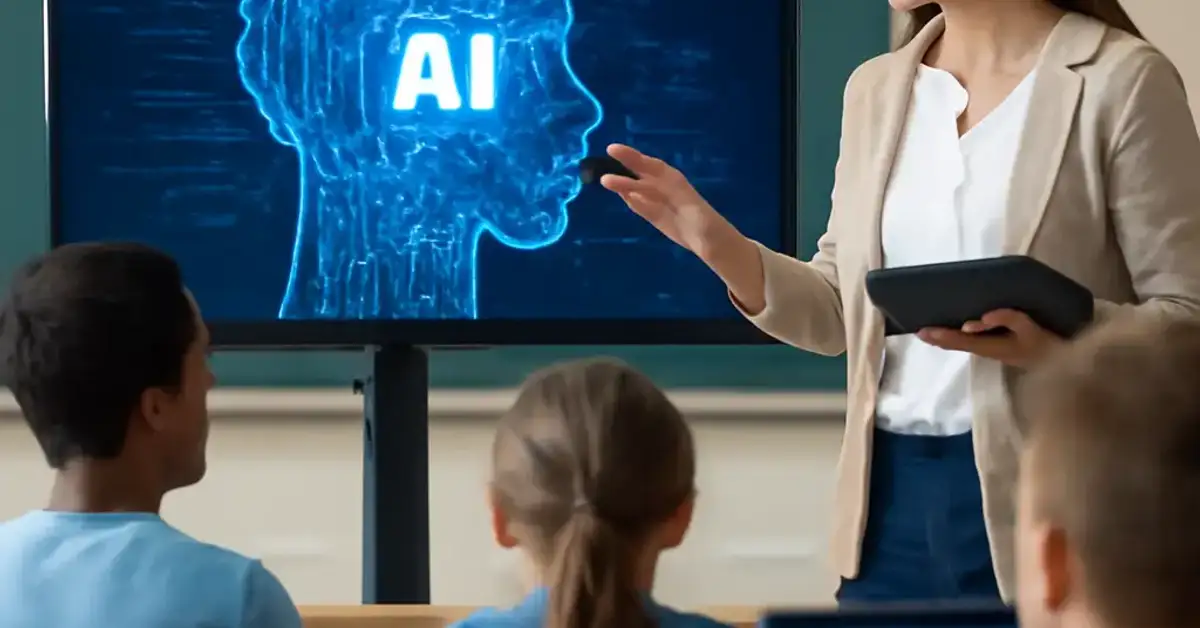
How Artificial Intelligence in Education Is Reshaping Classrooms
Walk into any modern classroom today, and you will likely see more than just a chalkboard and textbooks. Tablets, smartboards, and AI-driven software are becoming staples. But the real transformation goes deeper than gadgets. Artificial Intelligence in Education is fundamentally changing the learning experience—making it more personalized, efficient, and accessible. You can also browse more posts in artificial-intelligence.
Students no longer have to wait for a teacher to grade every paper to understand where they went wrong. AI tools can provide instant feedback on assignments, flagging areas of weakness and recommending targeted exercises. This shift from a one-size-fits-all model to a tailored approach is one of the most exciting developments in modern education.
Current Applications: Where AI in Education Is Making a Difference Today
The question is not whether how AI is changing learning but where it is happening first. Several practical applications are already in use across schools, universities, and online learning platforms.
Personalized Learning Platforms
Platforms like Carnegie Learning and Knewton use AI algorithms to adjust lesson difficulty in real time based on student performance. If a student struggles with algebra concepts, the system offers more practice problems and explanatory videos before moving on. This ensures no one gets left behind, and advanced learners are not held back.
Intelligent Tutoring Systems
Tools like Duolingo and Khan Academy’s Khanmigo act as virtual tutors. They answer questions, explain concepts, and even simulate one-on-one tutoring sessions. These systems are available 24/7, making help accessible anytime a student needs it.
Automated Grading and Feedback
Teachers spend hours grading. AI tools can now evaluate multiple-choice exams instantly and even grade essays for structure, grammar, and coherence. This allows educators to focus more on lesson planning and direct student interaction.
Smart Content Creation
AI can generate interactive content like flashcards, quizzes, and summaries from textbooks or lecture notes. Tools like Quizlet and Sana Labs use natural language processing to transform static study materials into engaging learning aids.
Administrative Support
Chatbots handle routine administrative queries from students—registration deadlines, course details, or timetable changes—freeing up staff for more complex tasks.
Key Benefits of Artificial Intelligence in Education
The advantages extend beyond convenience. Artificial Intelligence in Education offers measurable improvements in learning outcomes and operational efficiency.
Personalized Learning at Scale
In a traditional classroom, a teacher cannot tailor each lesson to 30 individual students. AI can. By analyzing data on student performance, learning pace, and even engagement levels, AI systems create unique learning paths for every student.
Real-Time Insights for Educators
AI dashboards show teachers which concepts the class is struggling with, which students are falling behind, and which lessons are most effective. This data helps educators make informed decisions about instruction.
Increased Accessibility
AI-powered speech-to-text, text-to-speech, and language translation tools make education more accessible for students with disabilities or language barriers. A student who is hearing impaired can use real-time captioning; a non-native speaker can get instant translations.
Cost and Time Savings
Automated grading, scheduling, and administrative tasks reduce the workload on teachers and staff. Over time, this can lower operational costs for schools and allow resources to be redirected to student support.
Challenges and Ethical Considerations of AI in Education
While the potential is vast, how AI is changing learning also raises significant concerns that educators, policymakers, and parents must address.
Data Privacy and Security
AI systems collect massive amounts of student data—performance records, behavioral patterns, even biometric data. Ensuring this data is stored securely and used ethically is a top priority. The Family Educational Rights and Privacy Act (FERPA) in the U.S. sets some standards, but gaps remain.
Algorithmic Bias
If the data used to train AI models contains biases—for example, historical grading disparities—the AI may perpetuate those biases. This could lead to unfair treatment of certain student groups.
Equity and Access
Not all schools have the budget for advanced AI tools. Students in underfunded districts may miss out on the benefits, widening the digital divide. AI in education must be implemented with equity in mind.
Teacher Training and Acceptance
Many educators are not trained to integrate AI tools effectively. Without proper professional development, even the best AI systems can go unused or misused. Resistance to change is also a real barrier.
Over-Reliance on Technology
There is a risk that students become too dependent on AI for answers, undermining critical thinking and problem-solving skills. Balancing AI assistance with traditional teaching methods is essential.
Future Trends: What to Expect in 2025 and Beyond
Looking ahead, Artificial Intelligence in Education will continue to evolve in several key areas.
AI-Powered Lifelong Learning
As job markets shift, adults will need to reskill and upskill continuously. AI can create personalized learning journeys for professionals, recommending courses and certifications based on career goals and current skill gaps.
Emotion AI and Engagement Monitoring
Future tools may analyze facial expressions, tone of voice, and typing patterns to gauge student engagement and emotional state. If a student seems frustrated, the system could offer encouragement or adjust the difficulty level.
Immersive Learning with VR and AR
Combining AI with virtual reality (VR) and augmented reality (AR) will create immersive learning experiences. Imagine a history student “walking” through ancient Rome or a medical student practicing surgery in a risk-free virtual environment.
AI-Generated Curriculum Design
AI could eventually design entire curricula based on learning science principles, real-time student data, and workforce trends. Schools might use AI to suggest which topics to teach and how to sequence them for maximum retention.
Blockchain-Verified Credentials
AI could work with blockchain technology to issue verifiable digital diplomas and certificates. This would reduce credential fraud and make it easier for employers to verify qualifications.
Conclusion: Embracing the Potential of Artificial Intelligence in Education
Artificial Intelligence in Education is not about replacing teachers—it is about empowering them. By handling repetitive tasks, providing real-time insights, and personalizing learning, AI allows educators to focus on what matters most: inspiring and guiding students. The challenges are real, but with thoughtful implementation, ethical guardrails, and a commitment to equity, the future of learning looks brighter than ever. For a related guide, see What Is Artificial Intelligence? 7 Easy Lessons for Beginners in 2026.
How AI is changing learning is already evident in classrooms and online platforms worldwide. As we move toward 2025, the key will be to harness this technology responsibly, ensuring that every student—regardless of background—benefits from the revolution.
Useful Resources
For further reading on Artificial Intelligence in Education, explore these credible sources:
- Edutopia: AI in Education – What You Need to Know – A comprehensive overview of AI tools and classroom impact.
- World Economic Forum: How AI Is Reshaping Education – Insights into global trends and policy recommendations.
Frequently Asked Questions About Artificial Intelligence in Education
What is Artificial Intelligence in Education?
Artificial Intelligence in Education refers to the use of machine learning algorithms, natural language processing, and data analytics to enhance teaching, learning, and administrative processes in educational settings.
How is AI being used in classrooms today?
AI is used for personalized learning platforms, intelligent tutoring, automated grading, content creation, and administrative chatbots that answer student queries.
Can AI replace teachers?
No—AI is designed to assist teachers, not replace them. It handles routine tasks and provides data insights, freeing teachers to focus on mentorship, critical thinking, and emotional support.
What are the benefits of AI in education ?
Benefits include personalized learning, real-time feedback, increased accessibility for students with disabilities, cost savings, and better data-driven decision-making for educators.
What are the risks of AI in education ?
Risks include data privacy concerns, algorithmic bias, widening the digital divide, teacher resistance, and over-reliance on technology that may hinder independent thinking.
How does AI personalize learning?
AI analyzes student performance data—correct answers, time spent, mistakes—and adjusts lesson content, difficulty, and pacing to suit each learner’s needs in real time.
Is AI in education expensive?
Costs vary widely. Some tools are free or low-cost, while comprehensive platforms can be expensive. However, long-term savings from automation and efficiency can offset initial investments.
What is an intelligent tutoring system?
An intelligent tutoring system uses AI to provide one-on-one instruction, answer questions, and guide students through material at their own pace, often outside regular class hours.
How does AI help special education?
AI tools offer speech-to-text, text-to-speech, predictive text, and personalized learning paths that support students with dyslexia, ADHD, hearing impairments, and other learning differences.
Can AI detect student cheating?
Yes—AI-powered proctoring software monitors eye movement, typing patterns, and browser activity to flag potential cheating. However, these tools raise privacy and accuracy concerns.
How does AI handle student data privacy?
Reputable AI tools comply with laws like FERPA and GDPR, encrypt data, and anonymize student information. Schools must vet vendors and establish clear data policies.
What is the role of AI in online learning?
AI powers adaptive course recommendations, automated feedback, discussion forum moderation, and virtual assistants that help students navigate online platforms.
Will AI widen the educational digital divide?
It could, if underfunded schools cannot afford AI tools. Equitable implementation requires government funding, open-source solutions, and thoughtful policy.
How can teachers learn to use AI tools?
Professional development workshops, online courses, and peer mentoring programs help teachers build AI literacy. Many edtech companies also provide training resources.
What is the future of AI in education after 2025?
Expect more immersive VR/AR experiences, emotion AI for engagement tracking, AI-generated curriculum design, and blockchain-verified credentials for lifelong learning.
Does AI reduce the workload for teachers?
Yes—by automating grading, lesson planning, and administrative tasks, AI can save teachers 5–10 hours per week, allowing them to focus on instruction and student interaction.
How does AI assess student writing?
AI evaluates essays for grammar, structure, coherence, and even argument strength. Tools like Grammarly and Turnitin provide instant feedback and plagiarism detection.
Can AI help with career guidance?
Yes—AI career counseling platforms analyze student strengths, interests, and labor market data to recommend suitable career paths and educational programs.
What is algorithmic bias in education AI?
Algorithmic bias occurs when AI models trained on biased historical data produce unfair outcomes—for example, flagging students from certain backgrounds more often for academic dishonesty.
How do I start using AI in my classroom?
Start small: try a free tool like Khanmigo, Duolingo, or Quizlet. Identify one pain point—grading, engagement, or personalization—and choose an AI solution that addresses it.